The Pollinator Guild
Blossom • Nectar • Honey • Seed
Welcome to the Pollinator Guild
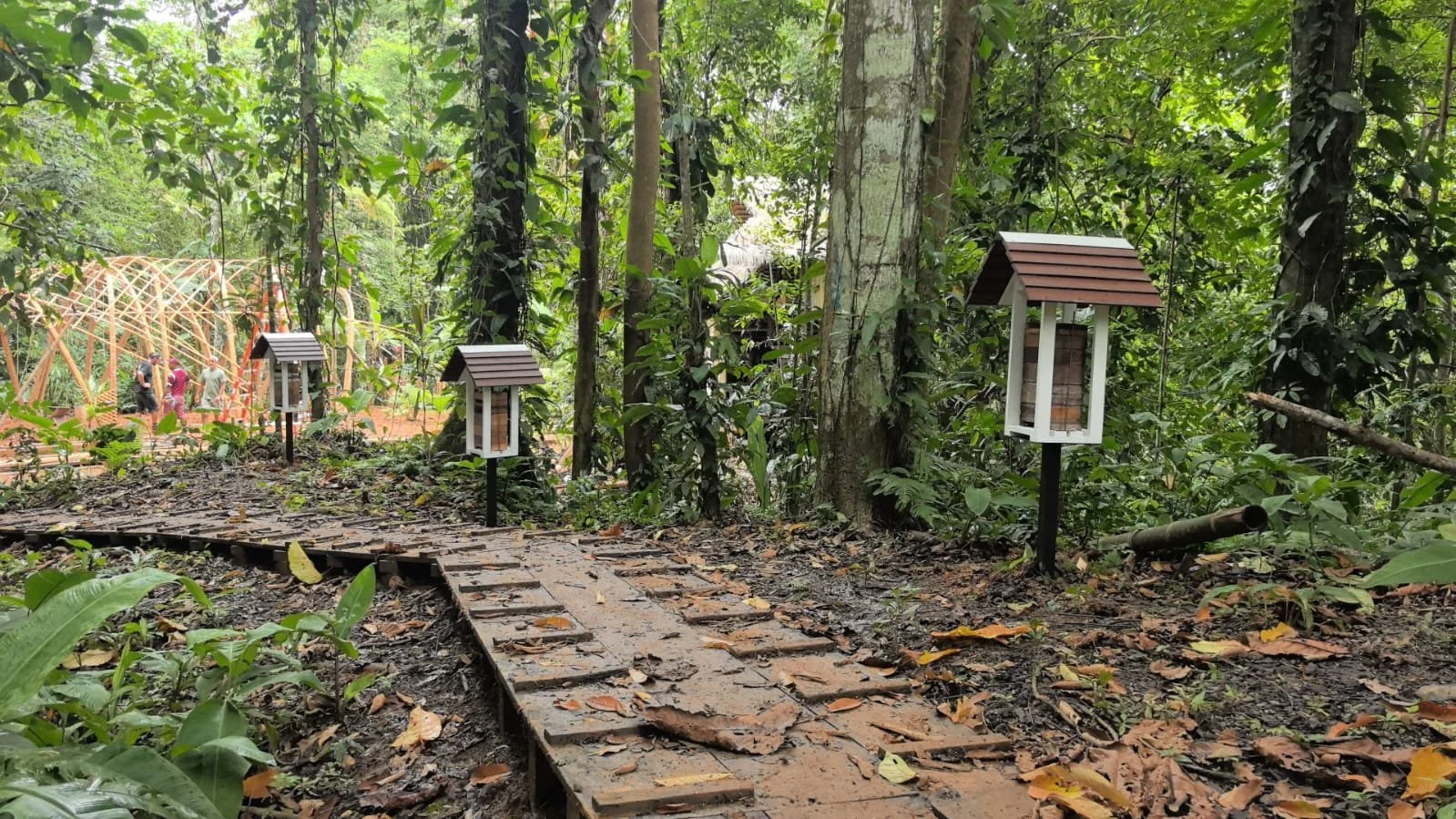
If you've found one of these bee houses, you've discovered one of the smallest—and most important—residents of Divine Sanctuary in the Jungle.
These are Mariola bees (Tetragonisca angustula), a native stingless bee species found throughout Costa Rica. Though tiny in size, they play a vital role in pollinating the flowers, fruits, trees, and forests that surround us.
At Divine Sanctuary, we believe that every living thing has a role to play. The story of these bees reminds us that regeneration happens through relationships.
The four bee houses represent the cycle that sustains life:
Blossom → Nectar → Honey → Seed
Every fruit, forest, and food system begins here.
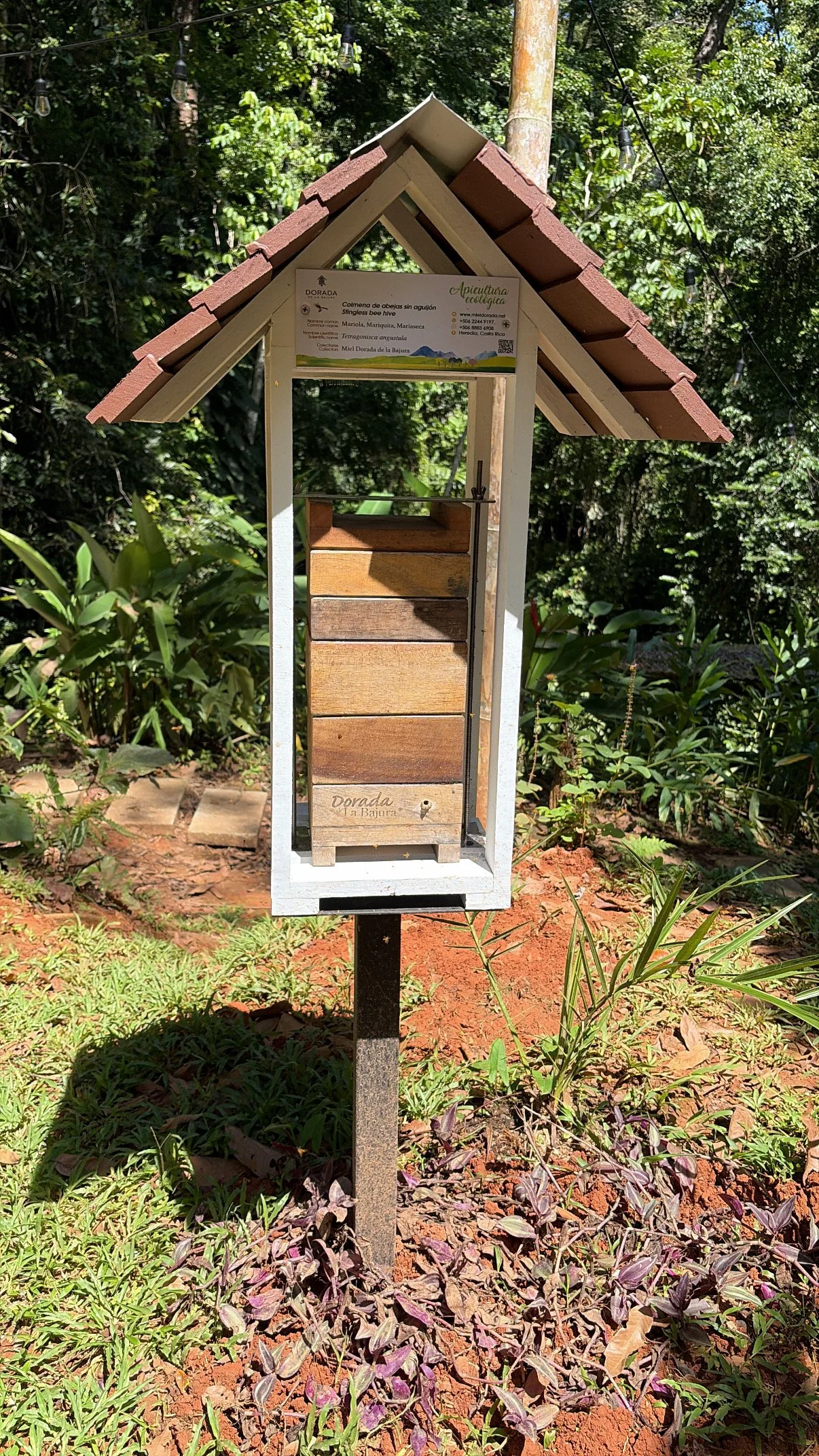
Blossom Hive
The Beginning
Everything starts with a flower.
Flowers are nature's invitation. Through their colors, scents, and shapes, they call pollinators to visit.
As bees move from blossom to blossom collecting food, they unknowingly carry pollen between plants. This simple act makes fertilization possible.
Without blossoms, there would be no cacao, no bananas, no pineapples, no forests, and no seeds for future generations.
Blossom reminds us that every great transformation begins with a small opening.
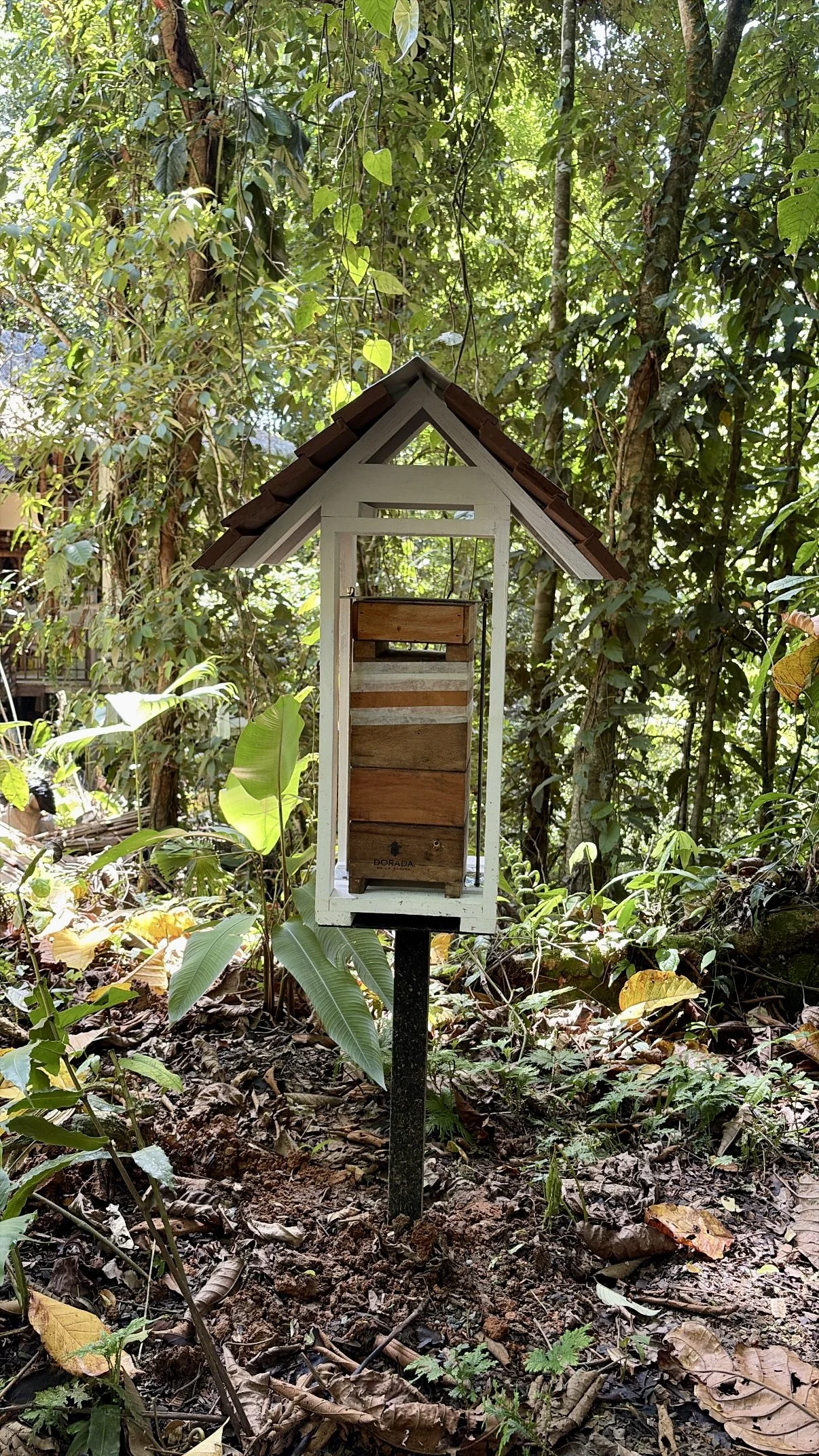
Nectar Hive
The Gift
Nectar is a gift freely offered by flowers.
This sweet liquid provides energy for bees and fuels their daily journeys through the forest.
As bees gather nectar, they also perform one of the most important ecological services on Earth: pollination.
More than a third of the world's food depends on pollinators.
The relationship is reciprocal:
Flowers feed the bees.
Bees help plants reproduce.
Both thrive together.
Nectar reminds us that abundance grows through cooperation.
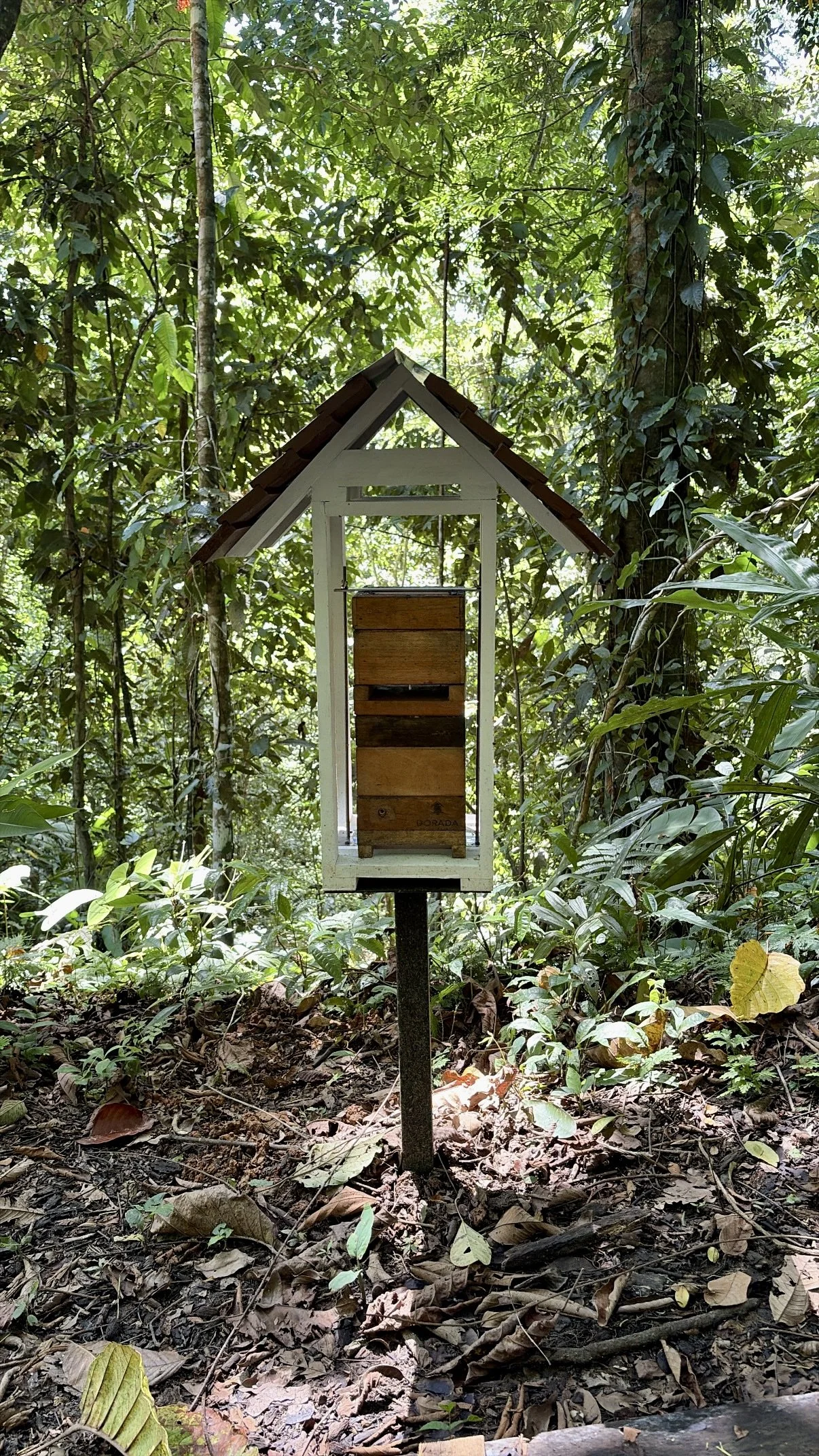
Honey Hive
The Transformation
Honey is nectar transformed through collective effort.
A single bee cannot create a thriving colony alone.
Through thousands of flights and countless small contributions, bees turn nectar into stored food, supporting the entire community.
Honey teaches us that lasting change happens through patience, collaboration, and shared purpose.
At Divine Sanctuary, we see this same principle in regenerative agriculture, education, and community building
Honey reminds us that small acts, repeated consistently, create abundance.
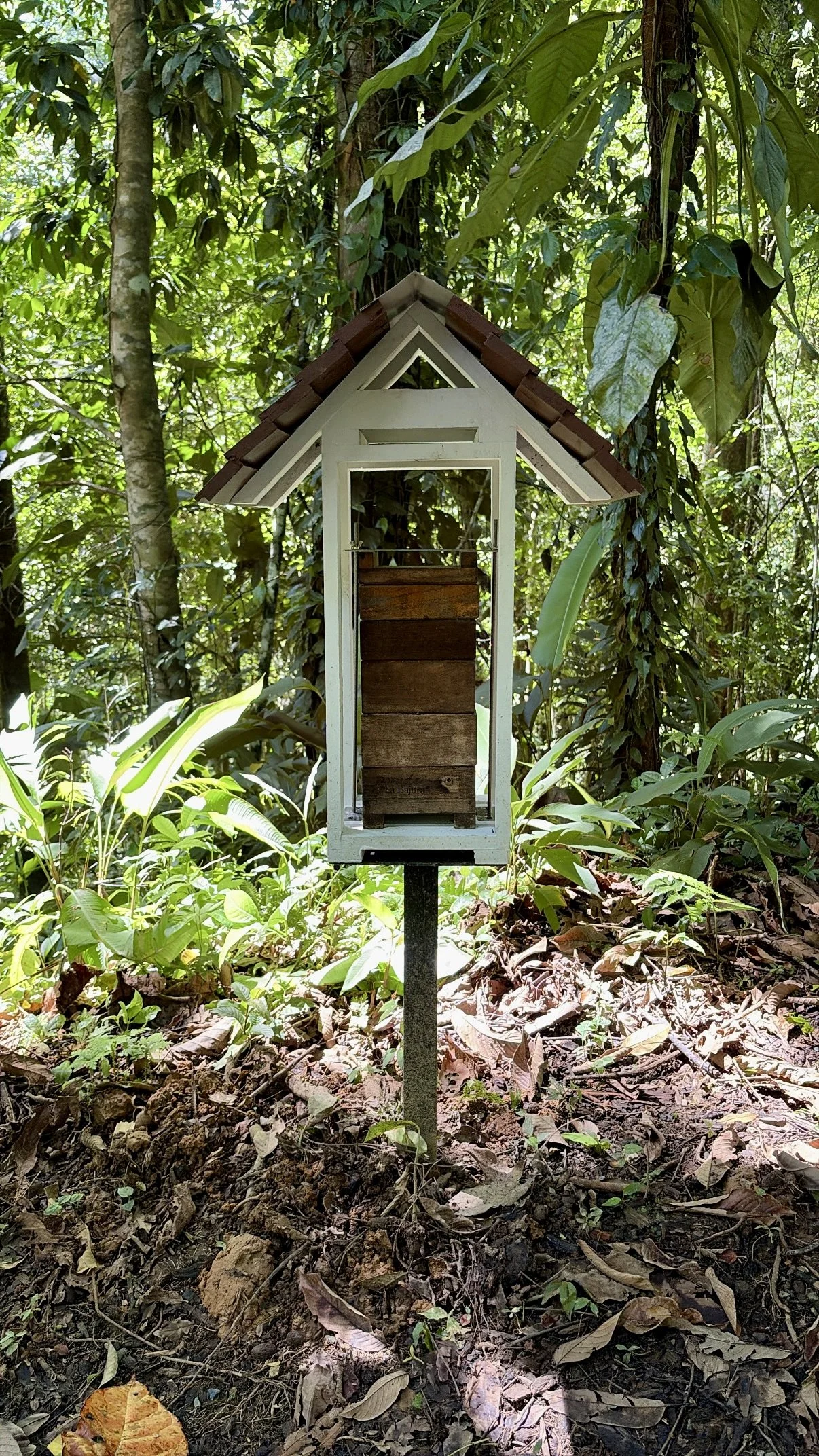
Seed Hive
The Future
Pollination leads to seeds.
Seeds become future forests.
Future food.
Future habitat.
Future generations.
Every seed carries the memory of the past and the possibility of the future.
The seeds produced through pollination help sustain biodiversity throughout Costa Rica's tropical ecosystems.
Seed reminds us that our actions today become tomorrow's landscape.
What Sets Us Apart
Unlike honeybees, Mariola bees are native stingless bees that evolved alongside the plants of Central America. These gentle pollinators are…

Excellent pollinators of native tropical plants
Non-aggressive and stingless
Important contributors to biodiversity
Essential partners in regenerative farming systems
Healthy populations of native bees support stronger ecosystems, healthier forests, and more abundant harvests.
Protecting pollinators means protecting the future of food and biodiversity.
Our Partnership with
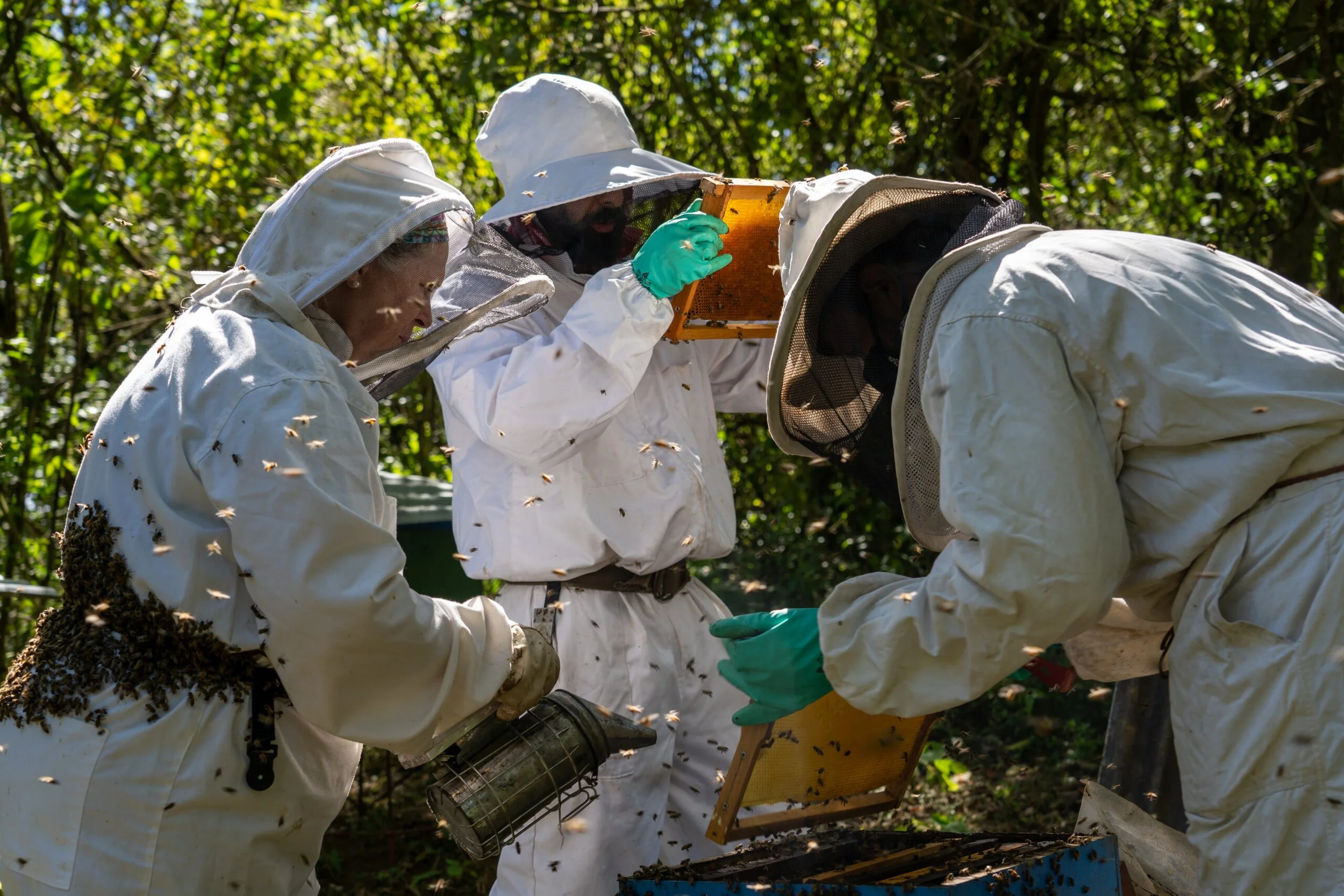
These Mariola bee colonies are cared for in partnership with Dorada Bees, a Costa Rican organization dedicated to the conservation, propagation, and stewardship of native stingless bees.
Through their expertise in meliponiculture—the traditional practice of keeping native stingless bees—we are helping create habitat and support healthy pollinator populations within the sanctuary.
Together, we are working to:
Protect native pollinators
Increase biodiversity
Support regenerative agriculture
Educate visitors about the importance of bees
Strengthen ecological resilience
Every bee house on this property represents a small investment in a healthier future.